Competing Designs
The competitors
Based on their research of what was achieved elsewhere the committee agreed on a budget of £20,000. It was decided to choose an architect for the job by holding a competition.
In January 1864 they advertised in newspapers and journals, offering a prizes of £100, £60 and £40 for the best designs. Twenty seven architects submitted plans.
Given past disagreement, it’s little surprise that selecting the winner took the committee a while. After much debate it was agreed that first prize should go to William H. Crossland, from Leeds. In second place was Bolton architect W. Best and third prize went to J. Maxwell from Bury.
Choosing a winner
William Crossland was an up-and-coming architect with his own practice in Leeds. The Town Hall was by far his largest and most important commission to date.
Born in Huddersfield, he was the son of a stonemason and a pupil of renowned architect George Gilbert Scott.
Crossland had won over the judges on several counts – the building was compact, he already had builders lined up to complete the work and he was ‘the only competitor who spoke with distinctness and confidence.’
He won on the understanding that he would make changes suggested by the committee. This was a sign of thing to come – the designs would change, develop and extend continually throughout the next 5 and a half years.
Budget blowout
Soon the maths didn’t add up and the costs increased from £20,000 to £154,755 9s 11d. In today’s money the cost of the project would be just over 17 million pounds. But a building like this would cost so much more than that now.
So where did the extra money go? In 1865 the Council asked for an Exchange to be added. This was to stop the trade in cotton and wool moving elsewhere, but it added an extra £7,000 to the Town Hall bill.
An enhanced plan
But that was just the start. The roof was redesigned, flying buttresses were added, towers remodelled and the Great Hall was extended.
A more ambitious scheme for decorating the room interiors was also put forward. For example, the Minton tiled floors and stained glass windows were not part of the original 1866 design.
To top it off, Crossland increased the height of the clocktower by adding an additional section. He added decorative pinnacles to each corner turret and lengthened the main spire.
When opened, The Architect’s Journal noted ‘We know no building which has been so thoroughly decorated as has this.’ High praise that came at a high cost.
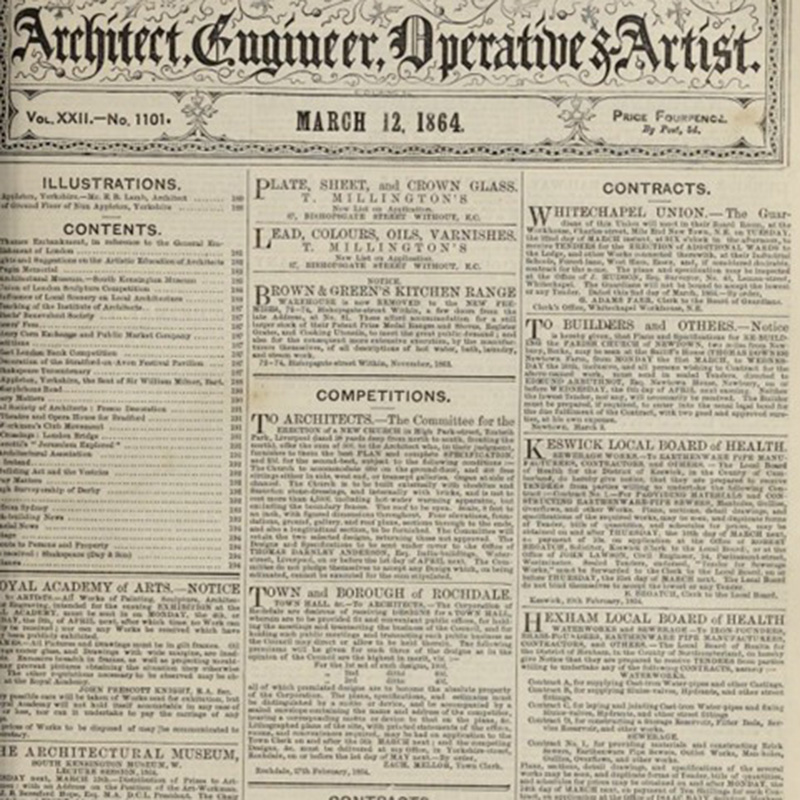
The design competition was advertised in The Builder journal.
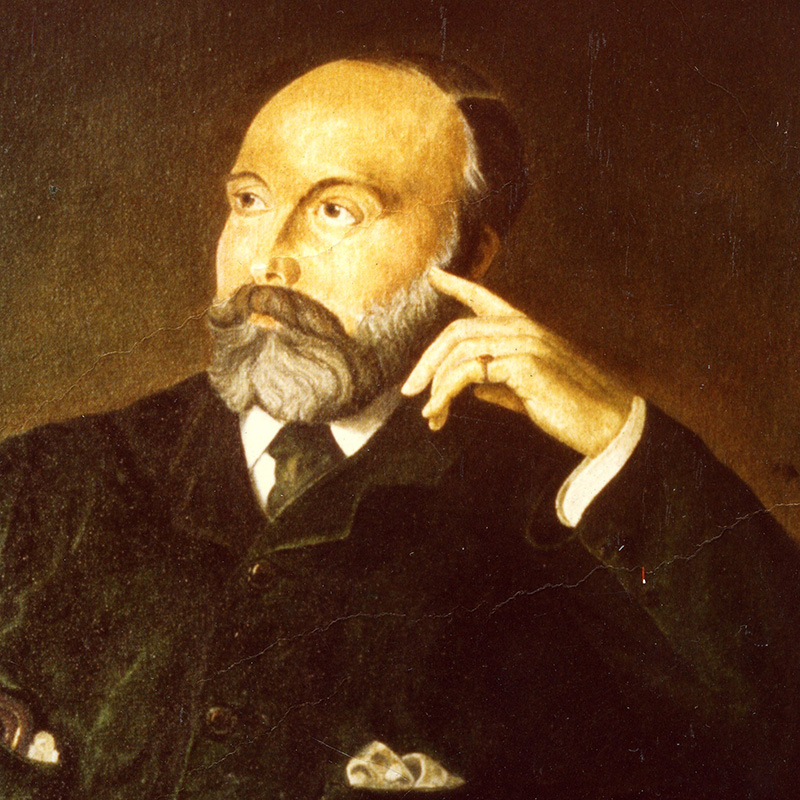
William Crossland won the architectural competition.